
Grantlun got us to assess our entire operation (the good and the bad). So far we are having real in-depth conversations as we work through the workbooks and are optimistic we will see real improvement to our quality and bottom line. Great approach, great product and great people.
Grant Lungren’s extensive real world construction experience and technical insight have been an invaluable help to our organization. Grant has helped us streamline our operations and helped us to implement many time saving automated systems. With his help we have trimmed our workforce while growing our revenue. I would recommend Grantlun to anyone that is interested in having a knowledgeable no-nonsense party on their advisory board.
Grant Lungren has been a tremendous asset to our company. He has helped us establish and define our corporate structure as well as aided us in the implementation of business processes that have allowed our company to grow. I personally, rely on him for his knowledge and insight to our industry – someone that I can lean on. We were taught very well how to run the equipment and get the jobs done. We just weren’t taught how to run a business. That’s where Grant comes in!
Grant’s knowledge of systems and procedures and, more importantly, his ‘been there, done that’ experience has helped us navigate the many pitfalls inherent to a growing construction company. In addition, Grant’s many contacts and nationwide exposure allow us to ‘benchmark’ ourselves against similar companies. Grant’s most important contribution has been to help me meet the company’s goals while at the same time meeting my personal goals for a balanced and full life.

Strategic Business Management
Running an infrastructure construction company is tough. Competition is cutthroat, risks are astronomical, profit margins are small and the resulting stress is staggering. Simply put, chaos is the norm. To establish order and realize a profit, you need to process the chaos and run your company like a job – with a plan and a schedule.
This one-day, in-house training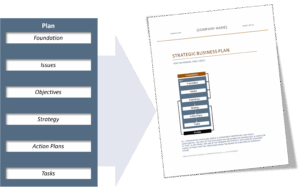 session provides you with the know-how and the tools needed to use Grantlun’s Strategic Business Management Process to do just that. It was created specifically for construction companies in the infrastructure construction industry, particularly those in the highway, bridge, pipeline, underground utility, oil field construction services, and site work segments.
Know-how
This training session teaches you how to use Grantlun’s Strategic Business Management Process to:
- Assess the six business elements of your company’s operations.
- Plan to address the issues at hand.
- Model the 3 core aspects of your operations: financial, organizational, and operational.
- Perform day-to-day operations to achieve your planned objectives.
Learn more about Strategic Business Management by clicking on the About SBM option in the menu at the top of this page.
Tools
To enable you to proceed immediately with building your business plan, you will receive Grantlun’s Strategic Business Plan Template and its Business Function Action Plan Template.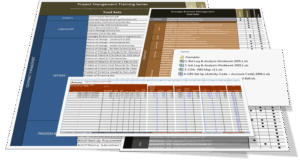
If you elect to purchase it separately, you can also receive the Advanced SBM Toolset, which includes:
- Financial Performance Assessment Workbook
- Job Log and Analysis Workbook
- Cash Flow Forecast Workbook
- Market Assessment Workbook
- Bid Log and Analysis Workbook
- Key Practices Assessment Workbook
- Current Organization Chart Templates
- Fleet Composition & Charge Rate Assessment Workbook
- Mindset Assessment Notebook
- Assessment Notebook Template
- Business Plan Outline Template
- Ideal Core Process Network Diagrams
- Ideal Role Charts
- Role Fulfillment Workbook
- Planned Organizational Chart Templates
- Revenue-Cost-Profit Forecast Workbook
- Strategic Business Planning & Management System Implementation Guide
Charge Rate Management
Setting accurate equipment charge rates is one of the most critical management chores in a construction company. It’s also one of the most difficult. If you set equipment charge rates too low, you won’t recover the true cost of owning and running your fleet – so job profits will be wiped out by equipment losses. If you set them too high, your cost estimates will be too high and your bid proposals won’t be competitive – so you will lose work, cover less overhead, and generate less profit.
This one-day in-house training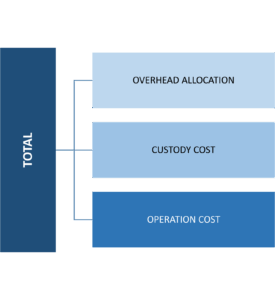 session at your facilities provides you with the know-how and the tools needed to accurately develop and maintain internal charge rates, estimating rates, and billing rates for every machine in your fleet.
Know-how
This training session teaches you the principles and best practices involved in equipment charge rate development, including:
- The types of equipment charge rates.
- How charge rates relate to accounting and estimating practices.
- Charge rate breakdown, components, cost factors.
- How to accurately estimate your cost for each component.
- Ways to recover equipment management overhead.
- Ways to recover equipment-related job overhead.
- How to establish the best fleet composition.
- Ways to decide whether to buy, lease, or rent short-term.
- How to audit and maintain charge rates.
- And much more…
Tools
To enable you to proceed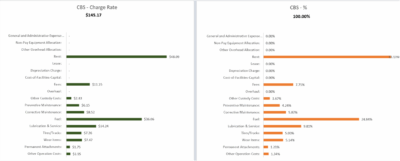 immediately with building your equipment rates, you can subscribe to the Cost Estimator module of the Ironworks Equipment Cost Management platform. Check it out at www.IronworksECM.com.
Advanced Bidding Practices
To stay in business you must consistently produce bid proposals that accurately reflect the cost of the work involved, at prices that the market will bear. To achieve peak performance, you have to be expert at bidding and adopt advanced bidding techniques that enable you to keep bid prices down while keeping profit levels up.
This one-day in-house training session at your facilities provides you the know-how and the tools needed to do just that. It was created specifically for construction companies in the infrastructure construction industry, particularly those in the highway, bridge, pipeline, underground utility, oil field construction services and site work segments.
Know-how
This training session introduces you to advanced techniques employed at each stage of the bid process:
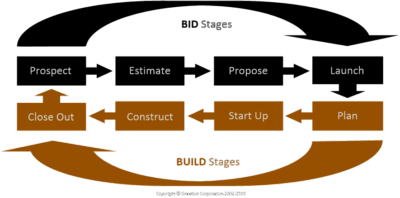
- Prospect Stage
-
- Strategic prospecting techniques
- Bid Log analysis
- Job Log analysis
-
- Estimate Stage
-
- Cost mapping techniques
- Standard cost-breakdown-structures
- Monte Carlo risk analysis
-
- Bid Stage
-
- Job-specific equipment rates
- Discount offers
- Weighted business overhead allowances
-
- Launch Stage
-
- Standardized budgeting techniques
- Job books
- Internal pre-jobs
-
Tools
To enable you to proceed immediately with the implementation of the best practices introduced during training, you will receive copies of the Core Process Maps presented during training. They graphically illustrate:
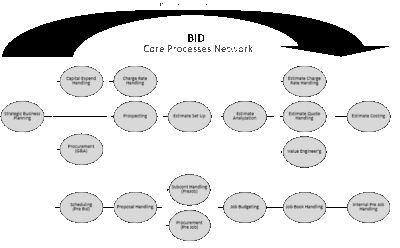
- What core tasks must be performed in each stage.
- The responsible role for each task.
- The order in which tasks should be performed.
- The tools needed.
If you elect to purchase them separately, you can also receive any of our advanced estimating tools in our Document Library, including:
- Bid Log & Analysis Workbook
- Job Log and Analysis Workbook
- Chart of Accounts to Price Breakdown Structure Mapping Worksheet
- Discount Offer Worksheet
- Job Book Outline
- Internal Pre-Job Checklist
Job Planning & Scheduling
In the infrastructure industry – where competition is fierce, and profits margins are razor thin – you can’t afford project delays, lost revenue or unrecovered extra costs. Now, more than ever, it’s essential to plan and schedule work strategically – so that you complete projects on time, stay within budget and collect every dime you are rightfully owed.
This one-day in-house training session at your facilities provides you the know-how and the tools needed to do just that. It was created specifically for construction companies in the infrastructure construction industry, particularly those in the highway, bridge, pipeline, underground utility, oil field construction services and site work segments.
Know-how
This training session introduces you to the key principles and best practices involved in planning and scheduling a project professionally:
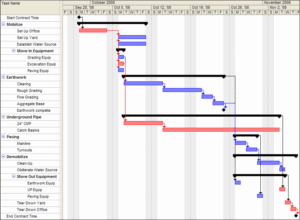
- Key Planning Principles
-
- Plan purpose from the contractor’s perspective
- Planning steps
- Work Breakdown Structure
- Activity definition, constraints, and duration estimating
-
- Key Scheduling Principles
-
- Schedule’s purpose from the contractor’s perspective
- Bar Chart Technique, Steps
- CPM Concepts, Technique, Properties, Steps
-
Tools
To enable you to proceed immediately with the implementation of the best practices introduced during training, you will receive copies of the Core Process Maps presented during training. They graphically illustrate:
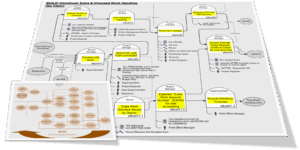
- What core tasks must be performed in each stage
- The responsible role for each task.
- The order in which tasks should be performed.
- The tools needed.
If you elect to purchase them separately, you can also receive any of our advanced planning and scheduling tools in our Document Library, including:
- Project Control Properties Toolset
- Back-to-Budget Production Analysis Worksheet
- Job Schedule Properties Checklist
Job Contract Management
Construction contracts anticipate change because construction plans and specifications cannot perfectly represent the reality of field conditions. Differences between as-bid and as-built project constraints always arise. The problem is, if you do not recognize changes, notify the project’s owner of them, and properly document them, their cost and consequential damage to your operations will come out of your pocket – instead of contributing greatly to your bottom line.
This one-day in-house training session at your facilities provides you with the know-how and the tools needed to handle job contract management properly. It was created specifically for construction companies in the infrastructure construction industry, particularly those in the highway, bridge, pipeline, underground utility, oil field construction services, and site work segments.
Know-how
This training session introduces you to the principles and best practices of construction contract management.
-
- General Principles
- Business Framework
- Project Constraints
- General Principles
-
- Contract Administration
- Contract Document Set
- Key Rules Contract Administration
- Cautionary Contract Provisions
- Breach of Contract
- Documentation
- Contract Administration
-
- Change Handling
- Changes Clause
- Contract Change Provisions
- Types of Changes
- Contract Errors
- Essential Change Management Process
- Change Handling
-
- Claim Handling
- Owner-Contractor Conflict Basis
- Key Risk Shifting Provisions
- Legal Basis of Impact Recovery
- Key Rules of Adjudication
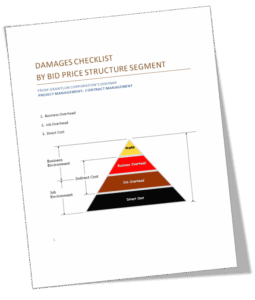
- Recoverable Damages
- Claim Categories
- Change of Condition Claims
- Change of Scope Claims
- Delay/Acceleration Claims
- Essential Claims Handling Process
- Claim Handling
Tools
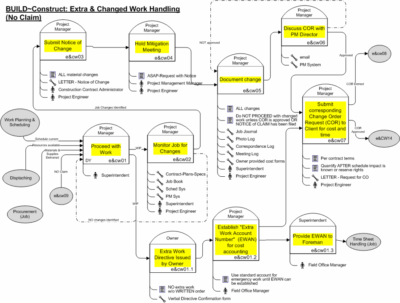
To enable you to proceed immediately with the implementation of the best practices introduced during training, you will receive copies of the Core Process Maps presented during training. They graphically illustrate:
-
- What core tasks must be performed in each stage.
- The responsible role for each task.
- The order in which tasks should be performed.
- The tools needed.
If you elect to purchase them separately, you can also receive any of our advanced contract management tools in our Document Library, including:
-
- Checklist – Cautionary Contract Provisions
- Checklist – Change Order Administration
- Checklist – Claim Documentation
- Checklist – Claim Package Outline
- Checklist – Common Claim Mix
- Checklist – Damages by Bid Price Structure
Where | When | Fees
Our training sessions are conducted at the facility of your choice, on any mutually convenient day and time.
Because training needs vary widely from company to company, we quote training fees on a project-by-project basis. Contact us to discuss how we can help.